
? Why Bread Packaging Matters
Bread is a perishable item that needs to be protected from moisture, air, and microbial contamination. Modern packaging machines enable high-speed, consistent, and hygienic sealing processes that meet food safety standards.
Good packaging also:
-
Improves shelf life
-
Enhances product presentation
-
Simplifies logistics and handling
-
Meets regulatory requirements
⚙️ Bread Packaging Machine Workflow
1. Feeding & Alignment
The bread loaves are placed on a conveyor belt, either manually or automatically. They are aligned into single-file rows using guiding rails or sensors to prepare for entry into the packaging unit.
2. Film Unwinding
The packaging film roll (plastic, laminated paper, or biofilm) is mounted and automatically unwound. Sensors detect film position and tension for consistent operation.
3. Forming the Package
Depending on the machine type, the film is either:
-
Wrapped around the bread (flow wrapping)
-
Inserted into preformed bags or pouches
For horizontal flow wrappers, the machine forms a pillow-shaped bag around the loaf.
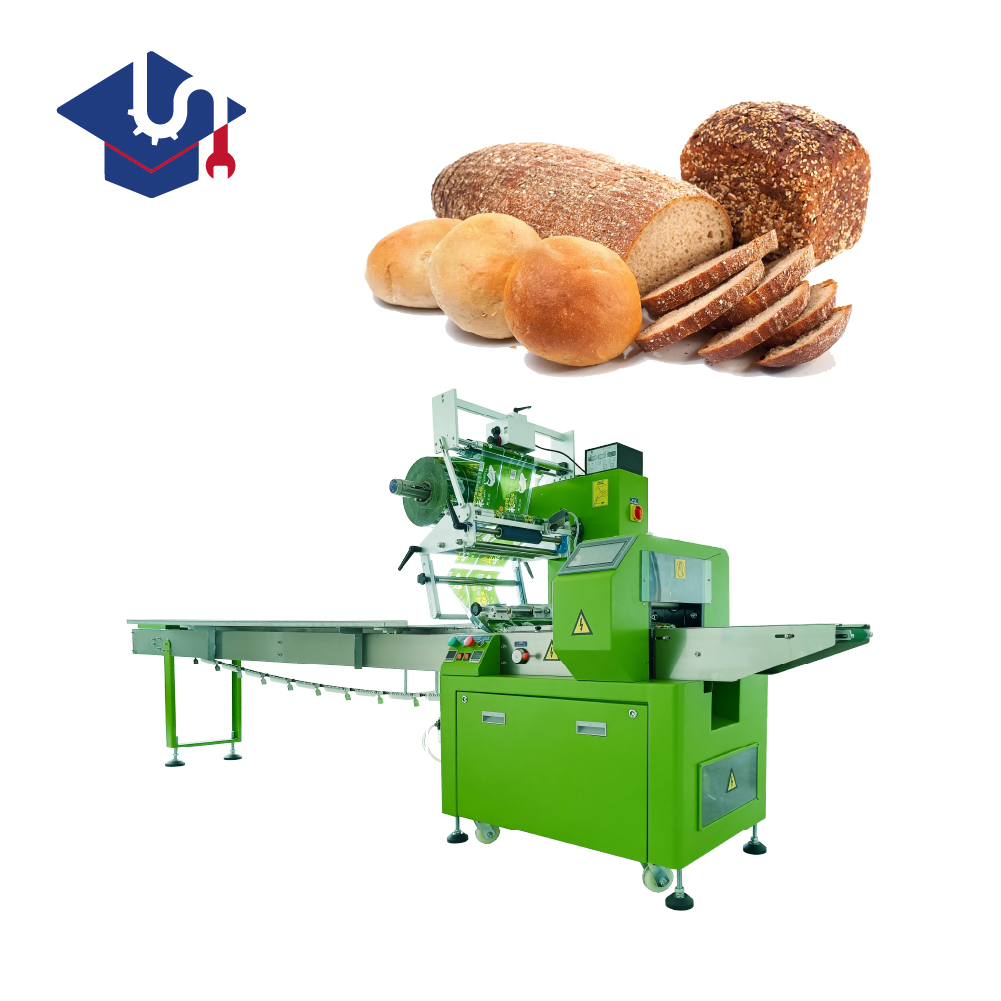
4. Filling & Sealing
-
The bread is placed into the formed film or pre-made bag.
-
The machine seals the longitudinal and end seals using heat or ultrasonic sealing.
-
Air removal or nitrogen flushing may be used for MAP (Modified Atmosphere Packaging).
5. Cutting & Discharge
The machine uses a rotary or guillotine cutter to separate individual packages. Finished products are conveyed for labeling, inspection, or boxing.
? This fully automated process can achieve 30–100 packs/min, depending on machine model and bread type.
? Types of Bread Packaging Machines
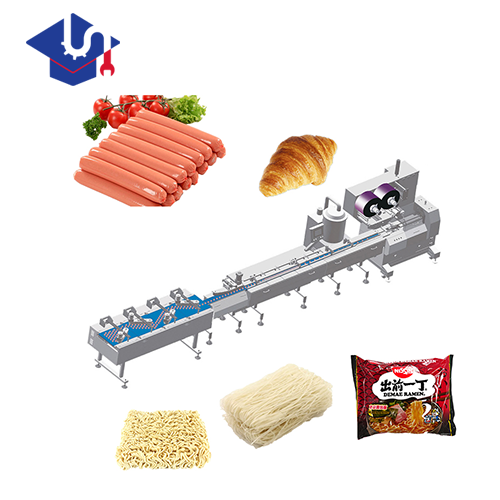
Here are the main types used in bakery production lines:
1. Horizontal Flow Wrap Machine (HFFS)
-
Best for sliced or unsliced loaves
-
Forms pillow-type packaging
-
Fully automatic, high speed
2. Vertical Form Fill Seal Machine (VFFS)
-
Common for buns or rolls
-
Uses vertical packaging and gravity feed
-
Compact footprint
3. Rotary Premade Pouch Packaging Machine
-
For bakeries preferring custom pouch designs
-
Supports resealable zip bags or gusseted pouches
4. Vacuum Packaging Machine
-
Ideal for longer shelf life
-
Removes oxygen before sealing
-
Often used for artisanal or specialty breads
? Common Bread Packaging Materials
Selecting the right material is essential for food safety and consumer satisfaction. Below are the most popular materials used with bread packaging machines:
| Material | Features | Use Case |
|---|---|---|
| BOPP (Biaxially Oriented Polypropylene) | Transparent, lightweight, moisture-resistant | Sliced bread, loaves |
| LDPE (Low-Density Polyethylene) | Soft, flexible, cost-effective | Buns, rolls |
| Laminated Film (PET/PE, OPP/CPP) | Strong, barrier protection, printable | Premium packaging |
| Compostable Films | Biodegradable, sustainable | Organic or eco-friendly bakeries |
| Paper with PE Coating | Natural look, grease-resistant | Artisanal bread |
Note: Materials must be FDA- or EU-compliant for food contact.
?️ Packaging Types Supported
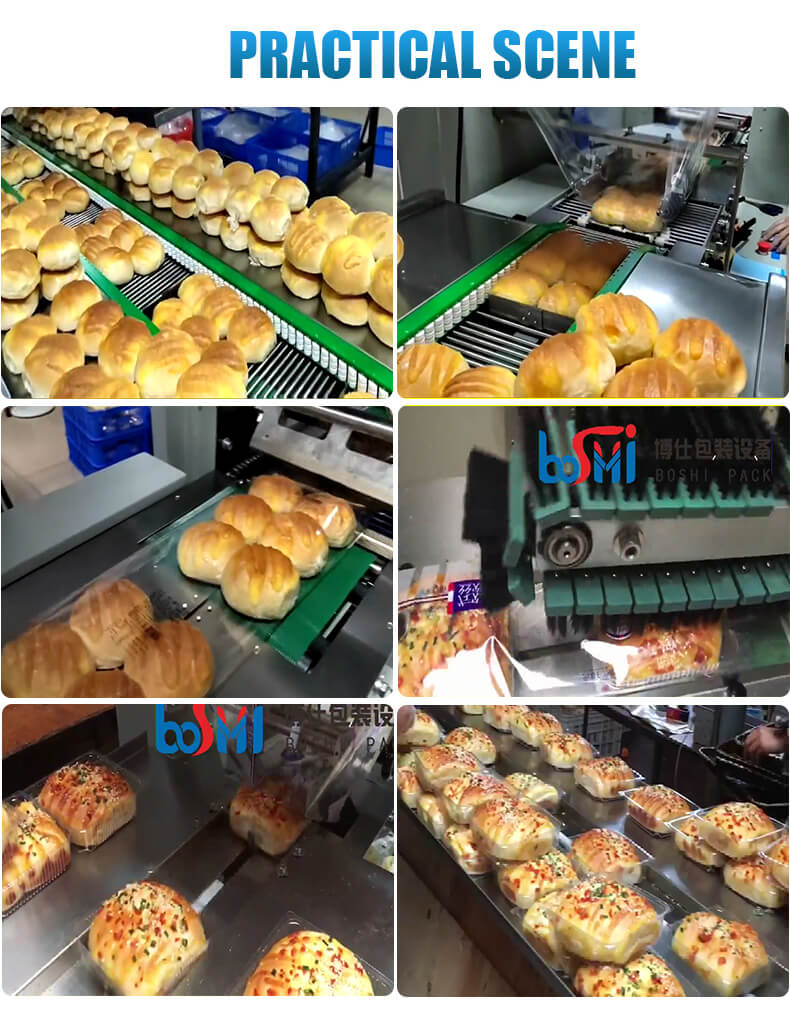
Modern bread packaging machines support various formats:
1. Pillow Bags
-
Sealed on three sides
-
Used for sliced bread and baguettes
2. Gusseted Bags
-
Expandable side folds
-
Great for loaves with high volume
3. Zipper Pouches
-
Resealable for customer convenience
-
Often used for multi-pack buns or sandwich rolls
4. Vacuum Packs
-
Long shelf life, reduced oxygen
-
Ideal for export or retail chains
5. Paper Bags with Window
-
Eco-friendly and visually appealing
-
Suitable for premium baked goods
? Choosing the Right Machine for Your Bakery
When selecting a bread packaging machine, consider:
-
✅ Product type: Loaf, roll, baguette?
-
✅ Packaging speed: Volume and automation level needed
-
✅ Bag style: Do you want resealable or pillow?
-
✅ Materials compatibility: Film thickness, paper or plastic?
-
✅ Space & budget: Machine size vs. factory layout
At Boshipack Packing, we offer tailored packaging solutions to meet bakery needs—whether you're a local artisan or industrial bread manufacturer.
? Explore our full range of bread packaging machines
Eco-Friendly Bread Packaging Trends
Sustainability is driving innovation in bakery packaging. Key trends include:
-
♻️ Use of biodegradable and compostable films
-
? Paper-based wrappers for rustic branding
-
? Minimalist designs to reduce material use
-
⚡ Energy-efficient machines with lower waste rates
Investing in eco-packaging not only meets regulatory pressure but also aligns with customer values.
Final Thoughts
Bread packaging machines are essential for efficient, hygienic, and attractive bakery operations. By understanding the workflow, material options, and packaging types, you can make informed decisions that enhance both your brand value and production efficiency.
For expert advice or a free machine consultation, contact boshipack Packing today.
FAQ: Bread Packaging Machines
Q1: Can one machine handle different bread sizes?
Yes. Many machines come with adjustable mold sizes or smart sensors to adapt to various loaf types.
Q2: Is nitrogen flushing necessary for bread packaging?
It depends on shelf life goals. For commercial sliced bread, nitrogen helps delay spoilage.
Q3: What’s the typical film thickness used for bread?
Most machines support 30–70 microns, depending on the product and barrier needs.
Q4: Can I use paper packaging with my flow wrapper?
Yes, provided the machine supports heat-sealable paper laminates.